
Lightweight alloy design for extreme environments
Space exploration require materials that can endure the harshest conditions mainly posed by highly-energetic proton irradiation from the Sun and its thermonuclear coronal instabilities. Investigating radiation effects in extraterrestrial environments and understanding materials’ behavior under non-equilibrium thermodynamics conditions have been integral parts of our research. We are passionate about unraveling the mysteries of space materials’ degradation within the space environment surround Earth.
Ref.: P.D. Willenshofer, M.A. Tunes et al. Materials Research Letters, 11(12), 1063–1072, 2023 (doi.org/10.1080/21663831.2023.2281589).
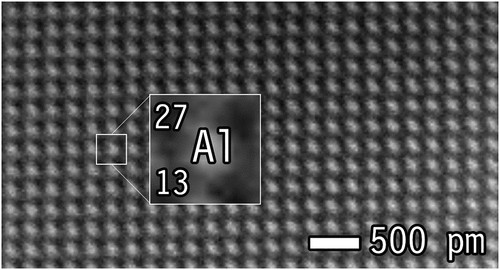
A major challenge for lightweight ultrafine-grained aluminium alloys to be applied in harsh environments is their microstructural stability under heating and irradiation. During his doctoral studies, Patrick Willenshofer discovered that aluminium crossover alloys are particularly stable under extreme environments due to the advent of both trans- and intra-granular precipitation of a very special hardening phase known as T-phase.
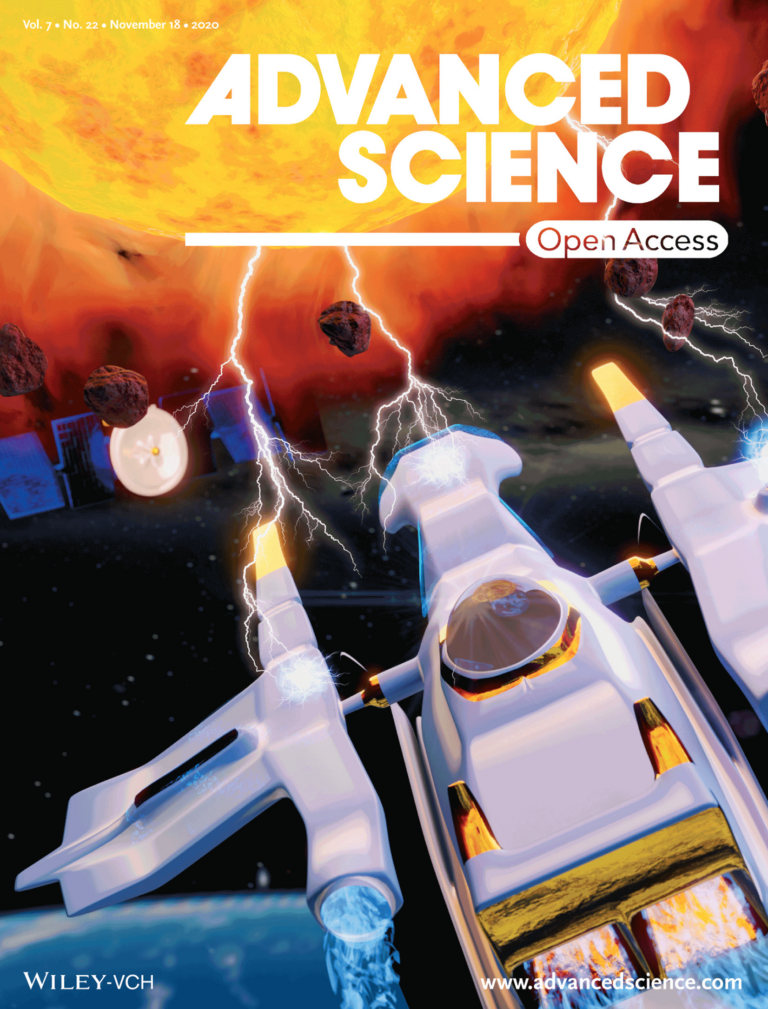
M.A. Tunes, L. Stemper, et al. Metal alloy space materials: Prototypic lightweight alloy design for stellar‐radiation environments (Adv. Sci. 22/2020). Advanced Science, 7(22), 202070126, Wiley, 2020.
https://doi.org/10.1002/advs.202070126
The history of aluminium alloys as space materials
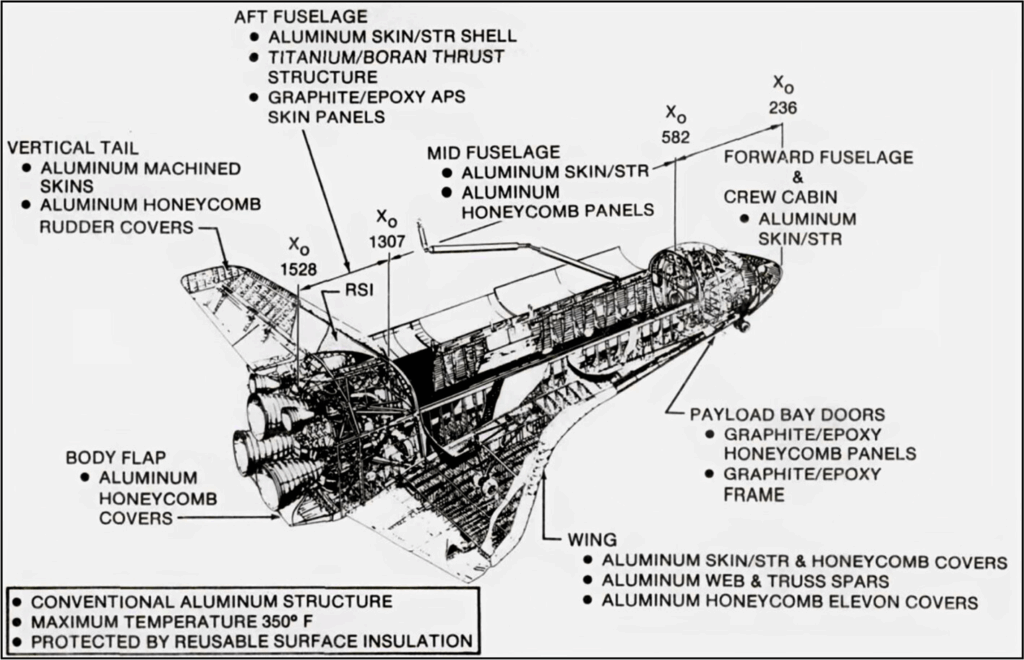
The metallurgy of aluminum alloys has long shaped the history of space exploration. Their combination of low density, high strength, and excellent manufacturability and formability makes them indispensable for structural components in satellites and spacecraft.
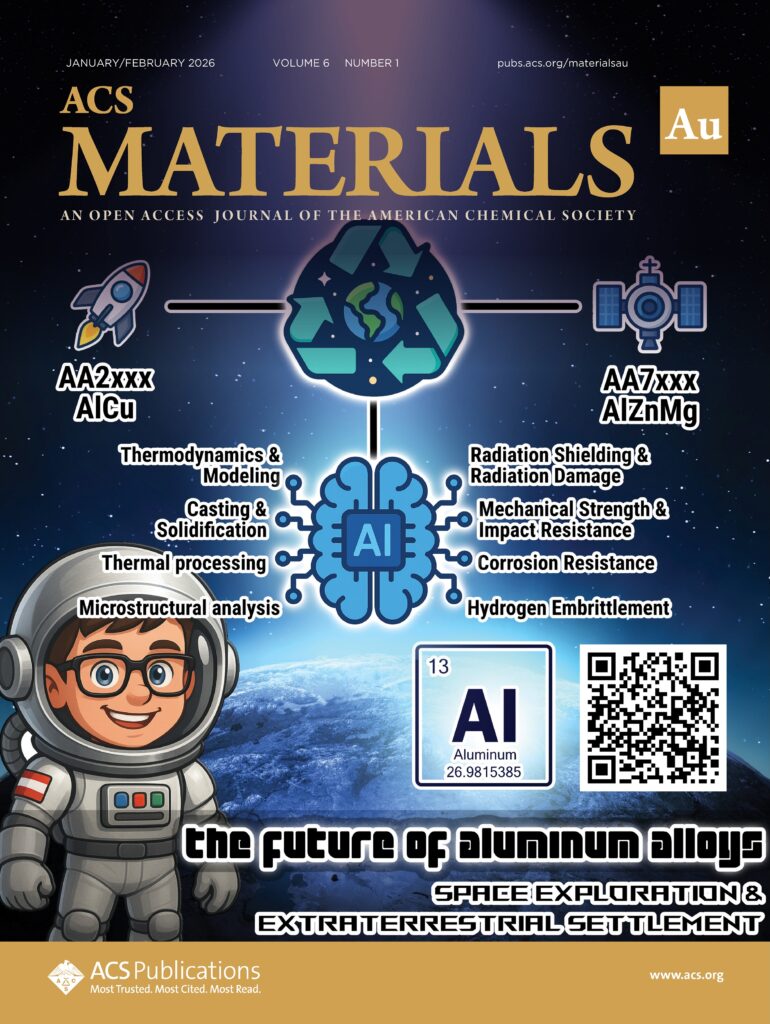
However, the next era of human space exploration, spanning long-duration deep-space missions and extraterrestrial settlement, poses unprecedented new challenges, including radiation damage and shielding, thermal cycling, micrometeoroid impacts, hydrogen embrittlement, and other degradation forces acting in synergy. Addressing these issues requires the reinvention of aluminum metallurgy, tailored to space environments. In a recent perspective review article, we traced the evolution of aluminum alloys in spaceflight, evaluating their performance under space-specific degradation mechanisms, and outlining future design strategies that integrate insights from chemistry, physics, metallurgy, and materials science to develop the next generation of space materials (doi.org/10.1021/acsmaterialsau.5c00139).
M.A. Tunes. The Legacy and Future of Aluminum Alloys: Space Exploration and Extraterrestrial Settlement. ACS Materials Au 6(1), 2026.
https://pubs.acs.org/doi/full/10.1021/acsmaterialsau.5c00139